Examining Neural Network Applications for Detecting Anomalous Patterns in Cross-Platform Reward Distributions Among Digital Wagering Communities
Written by Mara Walter · Jun 23, 2026
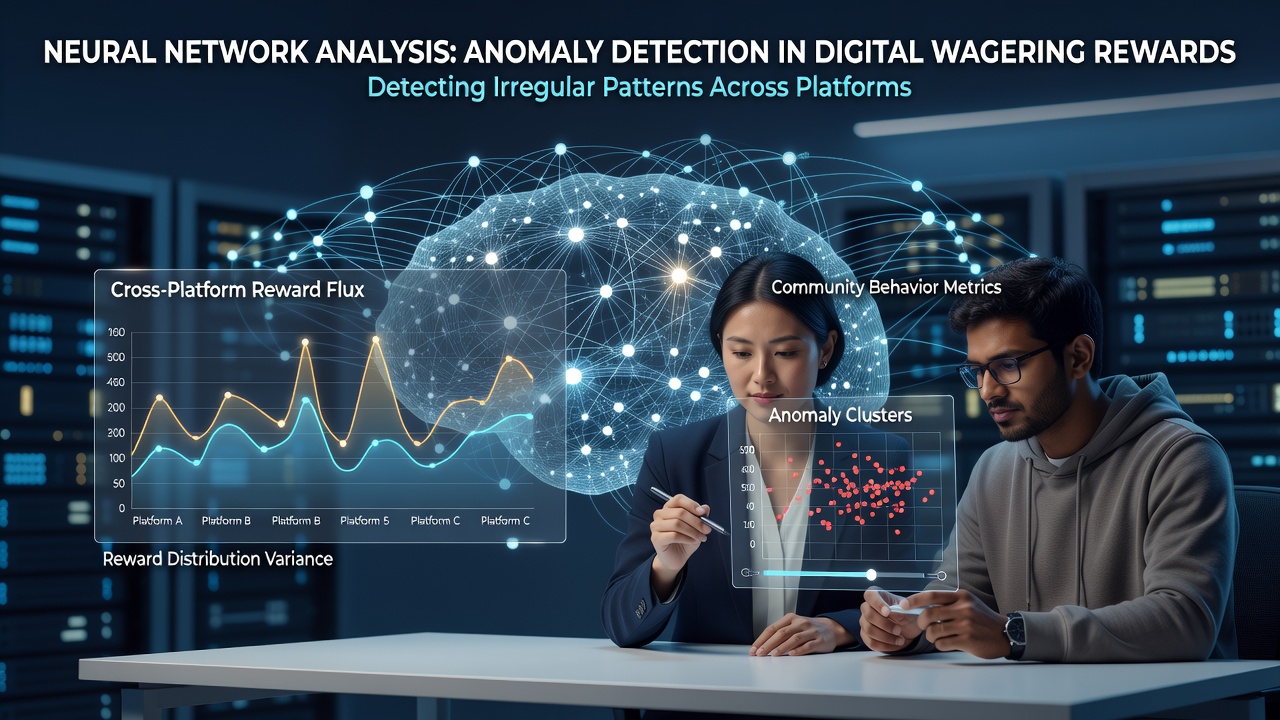
Examining Neural Network Applications for Detecting Anomalous Patterns in Cross-Platform Reward Distributions Among Digital Wagering Communities
Neural networks have emerged as practical tools for monitoring reward structures that span multiple digital wagering platforms, where operators track bonuses, loyalty points, and jackpot contributions distributed among users in interconnected ecosystems. Researchers apply these models to large datasets that capture transaction histories, account behaviors, and cross-site reward redemptions, which helps identify deviations that standard rule-based systems often miss. Data from early 2026 indicates growing integration of such technologies among platform providers seeking tighter oversight of promotional mechanics that operate across mobile apps and desktop interfaces.
Core Mechanisms Behind Anomaly Detection Models
Autoencoders and recurrent neural networks process sequential data streams that record how rewards move between accounts and platforms, while convolutional layers examine spatial relationships in user graphs that connect betting activity with reward claims. These architectures reconstruct normal patterns from training sets built on verified transactions, then flag inputs whose reconstruction error exceeds established thresholds. Operators feed the models with variables that include reward claim frequency, average payout size per platform, and timing correlations between deposits and bonus activations, which allows the networks to surface clusters that diverge from established baselines without relying on predefined thresholds alone.
Training occurs on anonymized historical records that regulatory bodies in multiple jurisdictions require operators to retain, and validation draws from labeled examples of previously confirmed irregularities such as coordinated multi-account bonus harvesting. Performance metrics reported in technical literature show precision rates above 85 percent when models incorporate both temporal and graph-based features, though results vary according to dataset quality and the diversity of platforms represented in the training distribution.
Cross-Platform Data Integration Challenges
Reward distributions rarely remain confined to single operators, because users frequently migrate between sites that share affiliate networks or common jackpot pools, creating fragmented records that complicate centralized monitoring. Neural network pipelines address this fragmentation through federated learning approaches that allow models to train across siloed datasets without exchanging raw user information, thereby respecting privacy constraints while still capturing distributional shifts. In June 2026 several platform consortia began testing these federated setups to standardize detection of reward anomalies that appear only when data from three or more distinct wagering environments are combined.
Feature engineering plays a central role here, as engineers normalize reward values across different currency denominations and bonus types before feeding vectors into the network, and they embed platform identifiers as categorical variables so the model can learn operator-specific norms alongside global patterns. This preprocessing step reduces false positives that arise when a high-volume reward event on one site looks anomalous only because the model lacks context from parallel activity on partner platforms.

Regulatory and Industry Adoption Patterns
Authorities in Nevada and several Australian states have referenced machine learning outputs during compliance audits that examine whether operators maintain adequate controls over promotional distributions, and the models supply quantitative evidence that supports or challenges internal audit findings. Industry groups such as the Gaming Laboratories International have published technical guidelines that outline minimum standards for model documentation and periodic retraining schedules, which helps ensure consistent application across different regulatory environments. Observers note that adoption rates climbed noticeably through the first half of 2026 as more jurisdictions began requiring documented use of advanced analytics for reward monitoring.
One documented case involved a multi-operator jackpot network where the neural system detected an unusual concentration of reward claims originating from a small set of IP addresses across four separate platforms within a 48-hour window, prompting further investigation that revealed automated scripting activity rather than organic user behavior. Such examples illustrate how the technology surfaces signals that manual review processes would struggle to isolate amid high transaction volumes.
Limitations and Ongoing Refinements
Model drift remains a persistent concern because reward structures evolve with new promotional campaigns and platform mergers, requiring continuous retraining on fresh data batches to maintain detection accuracy. Researchers have explored online learning variants that update weights incrementally as new transactions arrive, yet these approaches demand careful monitoring to avoid incorporating adversarial examples that malicious actors might introduce. Hardware constraints also influence deployment choices, since real-time inference across millions of daily events necessitates optimized architectures that balance depth against latency requirements.
Collaborations between academic institutions and wagering technology providers continue to refine graph neural network variants that explicitly model relationships between accounts and reward types, and early results suggest these architectures improve recall on coordinated anomalies compared with purely sequential models. Continued work focuses on explainability modules that translate flagged cases into human-readable feature contributions, which supports audit trails demanded by oversight agencies.
Conclusion
Neural network applications for anomaly detection in cross-platform reward distributions have moved from experimental pilots to operational components within many digital wagering environments, supported by technical standards and regulatory expectations that emphasize measurable oversight. Integration with federated frameworks and graph-based representations addresses the distributed nature of modern reward ecosystems, while documented case outcomes demonstrate practical utility in surfacing irregular patterns. Ongoing refinements in training protocols and explainability features indicate the field will continue adapting alongside changes in platform architecture and jurisdictional requirements through the remainder of 2026 and beyond.