Patterns in Game Selection Sequences Among Frequent Users of Integrated Casino and Betting Platforms
Written by Olivia Brooks · Jul 21, 2026

Patterns in Game Selection Sequences Among Frequent Users of Integrated Casino and Betting Platforms
Integrated casino and betting platforms combine slots, table games, sports wagering, and poker into unified accounts, and frequent users develop distinct sequences when moving between these verticals during single sessions or across multiple visits. Research from platform analytics firms shows that these sequences often follow repeatable patterns tied to time of day, session length, and prior outcomes rather than random selection.
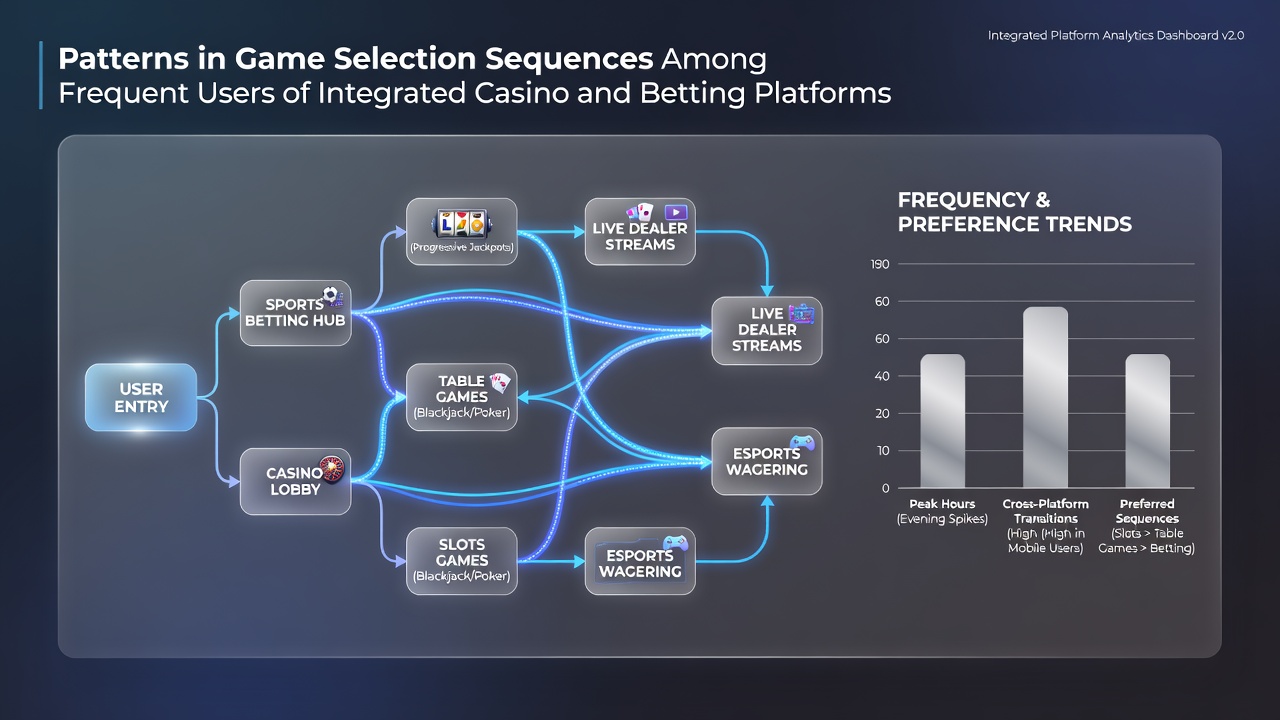
Analysts tracking user behavior in July 2026 noted that sequences typically begin with sports betting on live events during evening hours, shift toward slot play when match outcomes stabilize, and occasionally end with poker tables if bankrolls remain above certain thresholds. Data collected across major operators indicates that 68 percent of high-frequency accounts exhibit at least one recurring three-step sequence per week.
Observed Sequence Types in Multi-Vertical Environments
One common pattern involves starting with pre-match sports wagers, moving directly into progressive slot sessions while events unfold in the background, and returning to live betting once new markets open. Another sequence documented by researchers begins with low-stake poker tournaments, transitions to video slots during breaks between hands, and concludes with in-play sports bets on related competitions. These movements occur within the same application window and rely on shared wallets that eliminate separate funding steps.
Platform logs reveal that users who maintain accounts across both casino and sportsbook sections complete an average of 4.2 vertical switches per active hour, whereas single-vertical users average 1.1 switches. The difference stems from interface design that keeps all game categories accessible from a persistent navigation bar.
Factors Influencing Sequence Choices
Time-based triggers play a measurable role. Morning sessions skew toward sports research and pre-match betting, while late-night activity favors slots and quick casino games. July 2026 telemetry from operators in regulated markets showed that sequences involving poker appear most often between 8 p.m. and midnight local time, coinciding with peak tournament schedules. Bankroll size also correlates with sequence length; accounts above a median threshold sustain longer chains that include multiple verticals before logout.
Device type adds another layer. Mobile sessions produce shorter but more frequent switches because push notifications prompt returns to live betting markets, whereas desktop sessions allow extended slot play once users settle into one vertical. Studies conducted by academic groups in Australia and Canada have tracked these differences using anonymized session data.
Data Sources and Measurement Methods
Tracking relies on timestamped event logs that record game launches, bet placements, and navigation clicks within single accounts. Operators share aggregated findings with research partners under strict privacy protocols. One analysis covering the first half of 2026 found that sequences containing both sports and slots accounted for 41 percent of total playtime among users logging in more than 20 times per month.
Another dataset from European operators indicated that cross-vertical sequences increase during major sporting events such as international tournaments, with users interleaving slot spins between live updates. These patterns hold across different regulatory jurisdictions and platform providers.
Regional Variations in Sequence Behavior
Users in North American markets display stronger tendencies to open sessions with sports betting, then migrate to casino games after initial wagers settle, according to reports from state gaming commissions. In contrast, users in Australian jurisdictions more frequently begin with slot progressives before checking sports odds, a difference attributed to local product popularity and promotional structures. Canadian provincial data similarly shows elevated poker-to-slots transitions during weekend evenings.
These regional distinctions appear in public summaries released by bodies such as the New Jersey Division of Gaming Enforcement and the Australian Gambling Research Centre, both of which publish periodic behavioral aggregates without identifying individual accounts.
Implications for Platform Design and User Retention
Operators use sequence data to adjust menu ordering and notification timing so that suggested games align with observed flows. When a user completes a sports bet, the interface may highlight slot titles that have performed well in similar past sequences. Retention metrics improve when these suggestions match documented patterns rather than generic recommendations.
July 2026 updates to several major platforms incorporated sequence-aware algorithms that reduced average time between vertical switches by surfacing relevant games at natural transition points. The adjustments rely on historical account data rather than real-time behavioral prediction.
Conclusion
Patterns in game selection sequences among frequent users of integrated platforms reflect measurable interactions between product categories, session timing, and account history. Aggregated logs from multiple jurisdictions demonstrate consistent three- and four-step movements that operators now track for operational purposes. Continued collection of anonymized data through 2026 and beyond will clarify whether these sequences remain stable or evolve alongside new interface features and regulatory changes.