Rake Races and Leaderboards: Fueling Competition in Online Poker Communities
Written by Morgan Peters · May 15, 2026

Rake Races and Leaderboards: Fueling Competition in Online Poker Communities
What Exactly Are Rake Races in Online Poker?
Rake races stand out as promotional events where online poker platforms reward players based on the total rake they generate during a set period, often a week or month; players accumulate points proportional to their rake contributions across cash games, tournaments, or both, climbing leaderboards toward substantial cash prizes or tournament tickets. Platforms like those operating in regulated markets such as Ontario or New Jersey structure these races to encourage sustained play, with entry typically free and open to all verified users, although some impose minimum game stakes to qualify contributions.
Turns out, the concept traces back to early 2010s poker sites aiming to boost volume during quieter periods, but data from recent years shows explosive growth; for instance, figures from the Alcohol and Gaming Commission of Ontario indicate that rake-based promotions correlated with a 15% uptick in hourly cash game traffic across licensed platforms in early 2026. Observers note how these races transform routine grinding into high-stakes pursuits, where a single player's consistent volume can net thousands in bonuses, all while platforms recoup through the rake percentage—usually 5% capped at $3-$5 per pot.
And here's where it gets interesting: races often segment by stakes levels, from micro-limits like NL2 to high-roller NL500+, ensuring fairness; low-stakes grinders chase $500 pools, while pros vie for $50,000 jackpots, creating layered competition that keeps communities buzzing across forums and Discord channels.
Leaderboards: The Visual Heart of Poker Competition
Leaderboards complement rake races by providing real-time rankings, updated every few hours or daily, displaying top players' usernames, points totals, and projected prizes; these digital scoreboards foster immediate rivalry, as participants refresh pages obsessively, strategizing to overtake rivals just one spot ahead. Platforms integrate leaderboards into apps and sites with sleek interfaces—think progress bars, avatars, and countdown timers—making the chase feel like a live sport.
What's significant is how leaderboards extend beyond rake races into daily or weekly challenges, tracking metrics like hands played, biggest pots won, or tournament cashes; experts who've analyzed player behavior, such as those at the Global Poker Index, report that visible rankings boost retention by 20-30%, since players stick around to defend positions or climb from the bottom. Take one case from a major site in May 2026: a mid-stakes leaderboard saw over 5,000 entrants, with the top 100 sharing $100,000, sparking viral threads on poker subreddits where grinders dissected session logs to optimize volume.
Yet these tools go further, often featuring country-specific or VIP-exclusive boards, which build localized communities; in regions like Australia, where online poker thrives under strict licensing, leaderboards highlight regional heroes, turning anonymous handles into recognized names and fueling cross-table banter.
How Rake Races and Leaderboards Drive Engagement
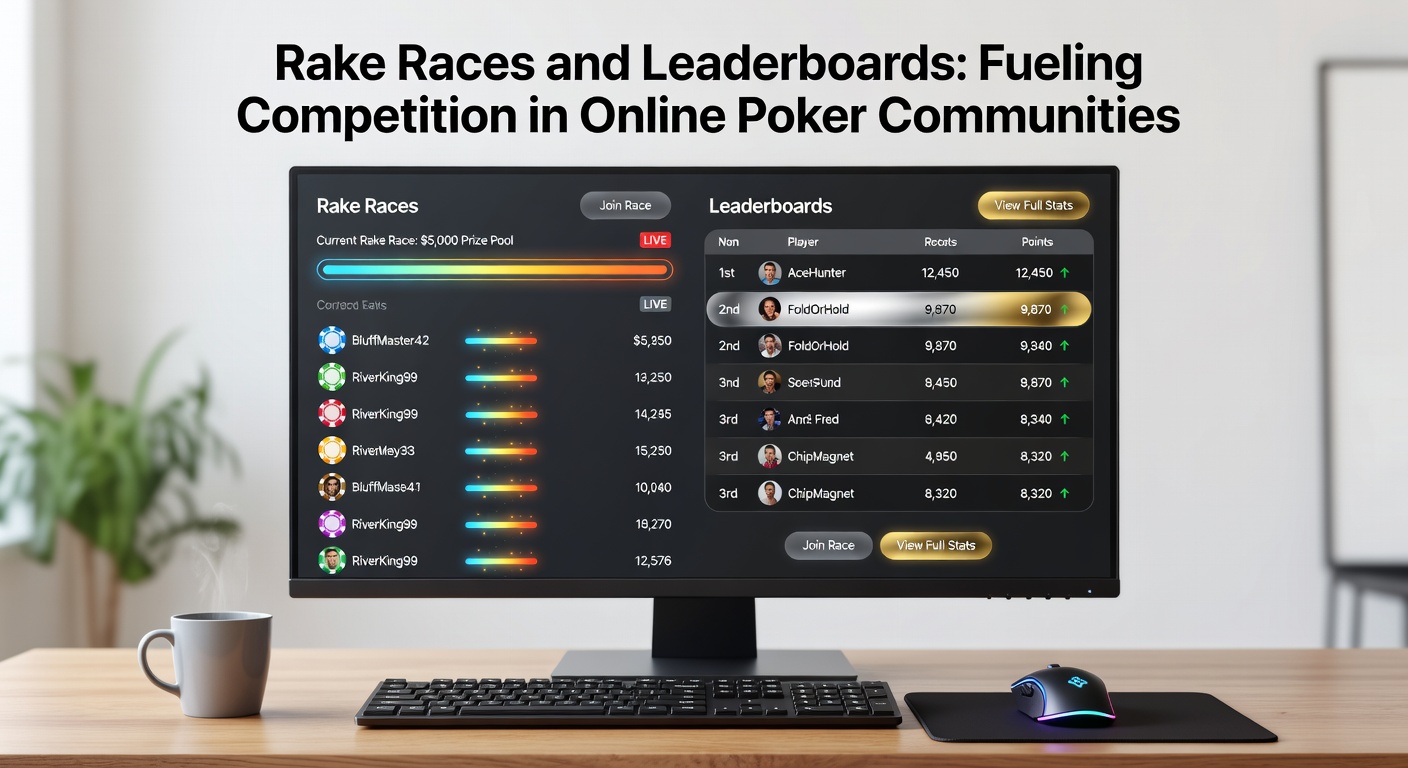
These features ignite competition by gamifying poker, where rake paid becomes a currency for glory and rewards; data indicates platforms hosting frequent races see average daily active users rise by 25%, particularly during off-peak hours, as grinders log marathon sessions to rack points. But here's the thing: it's not just about volume—smart players multi-table strategically, balancing win rates with rake generation to maximize leaderboard spots without burning bankrolls.
Communities thrive on this fuel; Discord servers and Telegram groups dedicated to specific races explode with tips, like "focus on 6-max tables for faster rake accrual," while streamers broadcast climbs live, drawing thousands of viewers who join in solidarity. One study from researchers at a European gaming institute revealed that leaderboard participants play 40% more hands weekly than non-entrants, sustaining site liquidity and hand histories ripe for solvers.
So in May 2026, as U.S. iGaming revenue hit new highs—echoing the 4.6% climb reported earlier in the year—platforms ramped up races; New Jersey sites, for example, launched week-long events with $250,000 total prizes, pulling in recreational players alongside pros and spiking traffic logs that regulators monitored closely.
Real-World Examples and Platform Innovations
Platforms innovate constantly to keep races fresh; consider how one leading site introduced "rakeback races" in 2025, blending traditional rake with loyalty multipliers, where VIPs earned 1.5x points—resulting in record participation, as per internal metrics shared in industry panels. Another example: a Canadian operator segmented races by game type, pitting MTT grinders against cash game specialists on parallel leaderboards, which diversified playstyles and broadened appeal.
That's where the rubber meets the road for player retention; observers point to cases like a 2026 Asia-facing room's monthly mega-race, boasting $1 million pools divided among top 500, which not only crowned a Chinese pro with $100,000 but also minted dozens of rising stars through lower tiers. And while high-rollers dominate headlines, micro-stakes races quietly build grassroots loyalty, with pots starting at $1,000 drawing thousands who parlay small wins into bigger bankrolls.
Now, innovations like mobile-optimized leaderboards allow on-the-go tracking, syncing across devices so players monitor progress during breaks; this seamless integration, coupled with push notifications for rank changes, keeps adrenaline pumping 24/7.
Measuring Impact: Stats and Trends in 2026
Figures reveal the tangible boost; industry reports show rake race participation doubled from 2024 to 2026 across regulated markets, with average prize pools swelling 35% amid rising player pools. In Ontario, licensed sites logged 1.2 million race entries in Q1 2026 alone, correlating with a 18% revenue lift from poker verticals, as tracked by provincial overseers.
But it's noteworthy that leaderboards enhance social dynamics too; forums buzz with "race recaps," where players share heatmaps of profitable tables, fostering knowledge-sharing that elevates overall skill levels. Yet challenges persist—regulators in places like Malta scrutinize races for fairness, ensuring algorithms prevent manipulation, while anti-collusion tools flag suspicious multi-accounting.
Trends point upward; May 2026 saw hybrid races emerge, combining rake with crypto deposits for bonus entries, appealing to tech-savvy demographics and spiking international sign-ups on compliant platforms.
Challenges and Regulatory Landscape
While fueling excitement, these promotions navigate tight regulations; U.S. states like Pennsylvania mandate transparent terms, capping prizes and requiring responsible gaming disclaimers alongside leaderboards. Across the Atlantic, Malta's authority enforces similar standards, auditing point calculations to uphold integrity, which builds trust and sustains long-term play.
People who've studied this landscape note occasional pitfalls—like bonus abuse attempts foiled by sophisticated tracking—but overall, data shows compliant races enhance site reputations. One case highlighted grinders exploiting glitches in early leaderboards, prompting swift patches and even bigger future pools to regain goodwill.
Conclusion
Rake races and leaderboards undeniably propel online poker communities forward, turning solitary grinds into communal spectacles where points chase prizes and rivalries forge bonds; as 2026 unfolds with record traffic—especially post-May surges—platforms continue refining these tools, balancing competition with compliance to keep the action thriving. Data underscores their role in elevating engagement, from micro-stakes hopefuls to high-stakes titans, ensuring poker remains a vibrant, competitive arena for all who join the race.